 Paris
Paris
In this article (13 sections)
- Moving to Paris with Kids: Schools, Neighbourhoods & Practical Tips
- Why Families Move to Paris
- The French School System Explained
- International School Options in Paris
- Best Neighbourhoods (Arrondissements) for Families
- School Admission Timeline
- Visa and Residency
- CAF: Family Benefits You Should Know About
- Healthcare and Paediatricians
- Settling In: Your First 30 Days Checklist
- Practical Tips from Expat Families
- Frequently Asked Questions
- Final Thoughts
Moving to Paris with Kids: Schools, Neighbourhoods & Practical Tips
A comprehensive family relocation guide to Paris — from navigating the French school system and choosing the right arrondissement to securing your visa and settling in.
Why Families Move to Paris
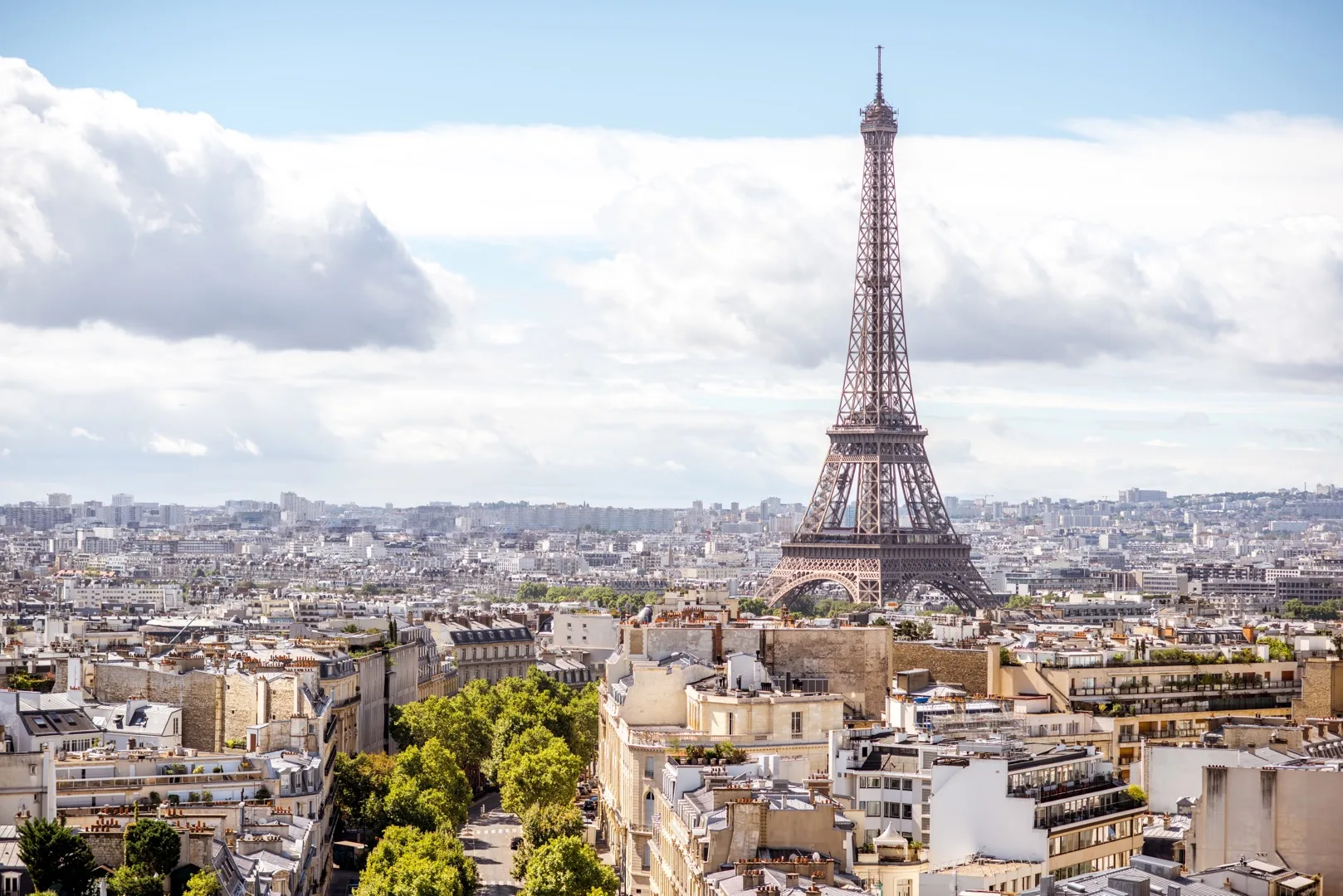
Paris has long been synonymous with art, gastronomy, and romance, but the French capital is also one of Europe's most rewarding cities for families. With a healthcare system regularly ranked among the best in the world, generous state-funded childcare, 26 weeks of paid parental leave, and a public school system that costs almost nothing, it is easy to understand why an increasing number of international families are making Paris home.
The quality of daily life is difficult to overstate. Children grow up surrounded by world-class museums — the Louvre, Musée d'Orsay, and Centre Pompidou all offer free entry for under-18s. Parks like the Jardin du Luxembourg, Bois de Boulogne, and Parc des Buttes-Chaumont provide vast green spaces in one of Europe's most walkable cities. The food culture means school canteens serve three-course lunches with fresh produce, and Saturday mornings revolve around the local marché.
France's central position in Europe makes family travel easy and affordable. London is a two-hour Eurostar ride away. Barcelona, Amsterdam, and Rome are all under two hours by air. Ski resorts in the Alps and Pyrenees are reachable by TGV in three to four hours. For families who value both cultural immersion and mobility, Paris sits at the centre of it all.
Financially, while Paris is expensive by French standards, it is considerably more affordable than London, New York, or Singapore when you factor in free public schooling, subsidised childcare (crèches), and the generous family benefits paid by the CAF (Caisse d'Allocations Familiales). Income tax is higher than in the Gulf or South-East Asia, but the public services families receive in return — healthcare, education, transport, and family allowances — more than compensate.
Whether you are relocating for a corporate posting, starting a business, pursuing research, or simply choosing a better environment to raise your children, this guide covers every aspect of moving to Paris with kids in 2026.
The French School System Explained
France's public education system is centralised and follows a strict national curriculum set by the Ministère de l'Éducation nationale. School is free, secular (laïcité), and compulsory from age 3 to 16. Understanding the structure is essential, even if you ultimately choose an international school, because the French system shapes the culture your children will live in.
École maternelle (ages 3–6)
The French equivalent of nursery and reception. It is divided into three sections: petite section (PS, age 3), moyenne section (MS, age 4), and grande section (GS, age 5). Maternelle focuses on socialisation, language development, and early literacy. Children learn through play, art, and structured group activities. Since 2019, schooling from age 3 has been compulsory in France.
École primaire / élémentaire (ages 6–11)
Primary school covers five years: CP (Cours Préparatoire), CE1, CE2, CM1, and CM2. The curriculum is rigorous by international standards — children are expected to read fluently by the end of CP and tackle structured writing, mathematics, history, geography, and science from CE1 onwards. Weekly hours are around 24, spread across four days (Monday, Tuesday, Thursday, Friday) in most Parisian schools.
Collège (ages 11–15)
Lower secondary school runs for four years: 6ème, 5ème, 4ème, and 3ème. Students study a broad curriculum including French, mathematics, two foreign languages, sciences, history-geography, arts, and physical education. At the end of 3ème, students take the Brevet des collèges, a national examination.
Lycée (ages 15–18)
Upper secondary school lasts three years: Seconde, Première, and Terminale. Students choose a general, technological, or vocational track. The general track leads to the Baccalauréat, France's rigorous national exam that determines university admission. Subjects are chosen from speciality options (spécialités) including mathematics, physics-chemistry, economics, literature, and more. The French Baccalauréat is recognised worldwide and is particularly strong for entry to European universities.
Key point: The French academic calendar runs from early September to early July, with two-week holidays roughly every six to seven weeks (Toussaint, Noël, Février, Pâques). Paris is in Zone C for holiday scheduling.
International School Options in Paris
Paris has a well-established international school scene. Broadly, families choose between three categories: fully international schools, bilingual (école bilingue) programmes, and the French lycée international system. Each has distinct strengths, and the right choice depends on your family's language situation, length of stay, and long-term plans.
Fully International Schools
These schools follow non-French curricula — typically American, British, or IB — and teach primarily in English. They are the most natural fit for families arriving without French language skills or those who expect to relocate again within a few years.
- International School of Paris (ISP) — A full IB continuum school (PYP, MYP, DP) located in the 16th arrondissement. ISP is one of the oldest international schools in France and has a strong track record of IB Diploma results. The school attracts a diverse student body from over 70 nationalities.
- American School of Paris (ASP) — Located in Saint-Cloud, just west of the city, ASP offers an American curriculum with AP courses and an optional IB Diploma. The campus is spacious and green — rare for Paris. It has been operating since 1946 and is one of the most established American schools in Europe.
- Ermitage International School — Based in Maisons-Laffitte, north-west of Paris, Ermitage offers both French Baccalauréat and IB tracks. It is a strong option for families who want the flexibility of dual-track education in a green, residential setting.
Bilingual Schools (Écoles Bilingues)
Bilingual schools teach the French national curriculum alongside a second language — usually English — with roughly equal teaching time in each. They are ideal for families who want their children to become fluent in French while maintaining strong English (or another language). These schools typically follow the French academic structure and calendar.
- École Jeannine Manuel — Widely considered the top bilingual school in France. Located in the 15th arrondissement, it offers a French-English bilingual programme from maternelle through Terminale. The school's Baccalauréat results are consistently among the highest in Paris, and it also offers the IB Diploma. Admission is highly competitive — apply early.
- École Active Bilingue (EAB) — One of Paris's longest-established bilingual schools, with several campuses across the city. EAB offers French-English and French-German bilingual tracks, following the French national curriculum. It is a solid choice for families who want genuine bilingualism within a French educational framework.
- EIB Paris (École Internationale Bilingue) — Part of the Globeducate network, EIB has campuses in the 7th, 8th, and 16th arrondissements. It offers bilingual sections in English, German, Spanish, and Chinese alongside the French curriculum. The school is known for strong academic results and a truly multilingual environment.
Lycée International System
France operates a network of sections internationales within select public lycées. These offer the French curriculum with enhanced bilingual instruction in a second language. The most prestigious is the Lycée International de Saint-Germain-en-Laye, which offers 14 national sections (American, British, German, Japanese, and more). Students take the Option Internationale du Baccalauréat (OIB), a more demanding version of the French Bac with additional exams in the section language. This route is outstanding for families who intend to stay long-term and want their children to gain both French and international qualifications at minimal cost (public schools are free).
Pro tip: Sections internationales in public schools have entrance exams. Apply through the school's administration between January and March for a September start. Demand is very high — have a backup plan.
Best Neighbourhoods (Arrondissements) for Families
Paris is divided into 20 arrondissements, each with its own character. For families, safety, green spaces, school proximity, and community feel matter most. Here are the top choices:
| Area | Character | Why Families Love It | Avg. Rent (3-bed, €/month) |
|---|---|---|---|
| 16th (Passy / Auteuil) | Elegant, quiet, residential | Bois de Boulogne, Ranelagh gardens, ISP and multiple bilingual schools nearby, safe and spacious | 3,200 – 4,500 |
| 15th | Village feel, diverse, family-oriented | Paris's most populous arrondissement with excellent public schools, Parc André Citroën, École Jeannine Manuel, many playgrounds | 2,600 – 3,500 |
| 7th | Classic Paris, Eiffel Tower, stately | Champ de Mars for daily play, strong public and private schools, EIB campus, very safe | 3,500 – 5,000 |
| 6th (Saint-Germain) | Intellectual, literary, vibrant | Jardin du Luxembourg, leading collèges and lycées, walkable, bookshops and cultural activities | 3,800 – 5,500 |
| Neuilly-sur-Seine | Affluent inner suburb, tree-lined | Borders Bois de Boulogne, excellent schools, safe, slightly more space than central Paris, Métro Line 1 | 2,800 – 4,000 |
| Saint-Germain-en-Laye | Charming royal town, green, suburban | Home to Lycée International, large forest, RER A to central Paris (35 min), family community, more affordable | 1,800 – 2,800 |
| Versailles | Historic, spacious, well-connected | Lycée international sections, gardens and forest, RER C to Paris, excellent public schools, houses with gardens possible | 1,600 – 2,500 |
Within Paris proper, the 16th arrondissement is the classic expat family choice — particularly the Passy and Auteuil quarters. It is close to the Bois de Boulogne, one of the city's two large forests, and home to several international and bilingual schools including ISP, EIB, and the Lycée Janson de Sailly (which has a section internationale). The trade-off is that it can feel quiet and somewhat insular compared to more vibrant quartiers.
The 15th arrondissement offers a more authentic Parisian family experience. It is the city's largest by population and has a genuine village atmosphere with local markets, bakeries on every corner, and excellent public maternelles and écoles élémentaires. École Jeannine Manuel is located here, and rents are more reasonable than the 6th or 7th.
For families who need more space, a garden, and lower costs, the western suburbs — particularly Saint-Germain-en-Laye and Versailles — offer an outstanding quality of life. Both have excellent international education options and are well-connected to central Paris via the RER commuter rail network. Many embassy and corporate families choose Saint-Germain-en-Laye specifically for the Lycée International.
Browse all Paris schools and neighbourhoods on SchoolVita to compare options side by side.
School Admission Timeline
Timing is critical. The French academic year begins in early September (la rentrée), and most schools — public and private — follow a structured admission calendar.
Public Schools (French System)
- January–March: Inscription en mairie — register your child at the town hall (mairie) of your arrondissement or commune. You will need proof of address (justificatif de domicile), your child's birth certificate, the family booklet (livret de famille) or equivalent, and vaccination records (carnet de santé). The mairie assigns your child to the nearest school based on the carte scolaire (school catchment map).
- March–April: Visit the assigned school, meet the directeur/directrice, and confirm enrolment (admission).
- June: Attend the welcome meeting and receive the class assignment.
- September: La rentrée — school begins.
Private and International Schools
- September–December (year before): Research, visit open days, attend virtual tours.
- January–February: Submit applications. Top schools like École Jeannine Manuel and ISP have deadlines in January or early February.
- February–April: Entrance tests, interviews, and assessments. Bilingual schools test French and English proficiency. Some international schools require standardised tests (MAP, CAT4).
- March–May: Offers issued. Accept and pay deposit to secure the place.
- September: School begins.
Important: Mid-year enrolment is possible in public schools (the mairie is legally obliged to assign a place), but private and international schools have very limited mid-year availability. Plan for a September start whenever possible.
Visa and Residency
Your visa pathway depends on your nationality and circumstances. Here are the main routes for families moving to Paris:
EU/EEA Citizens
If you hold a passport from an EU or EEA country, you have the right to live and work in France without a visa under the principle of freedom of movement. You simply need to register with the local authorities, open a French bank account, and enrol your children in school. After five years of continuous residence, you can apply for permanent residency or French citizenship.
Passeport Talent (Talent Visa)
France's Passeport Talent visa is designed for skilled professionals, entrepreneurs, researchers, artists, and investors. It is valid for up to four years and includes an automatic carte de séjour (residence permit) for your spouse and children. This is the most common route for non-EU professionals relocating to Paris. Key categories include:
- Salarié qualifié: Employed with a salary above 1.5x the French minimum wage (approximately €39,000/year in 2026)
- Créateur d'entreprise: Entrepreneurs starting a business in France
- Chercheur: Researchers attached to a French institution
- Profession artistique et culturelle: Artists and cultural professionals
Carte de Séjour (Residence Permit)
Non-EU citizens who do not qualify for the Talent Visa will need to apply for a long-stay visa (visa de long séjour, VLS-TS) through the French consulate in their home country. Upon arrival, this is validated as a carte de séjour. The process involves submitting documents to the Service-Public.fr platform and attending a rendez-vous at the préfecture.
Key Documents Required
- Valid passports for all family members
- Birth certificates (apostilled and translated into French by a sworn translator — traducteur assermenté)
- Marriage certificate (apostilled and translated)
- Proof of income or employment contract
- Proof of accommodation in France (attestation d'hébergement or rental contract)
- Health insurance (private insurance until covered by Sécurité sociale)
- Children's vaccination records (BCG, DTP, and MMR are mandatory in France)
CAF: Family Benefits You Should Know About
One of France's great advantages for families is the Caisse d'Allocations Familiales (CAF). Once you are a legal resident and have registered with the CAF, your family may be eligible for a range of financial benefits, regardless of nationality:
- Allocations familiales: Monthly payments for families with two or more children. The amount depends on the number and ages of children, not on income. For a family with two children, this is approximately €140/month.
- Prestation d'accueil du jeune enfant (PAJE): Financial support for families with children under 3, including a birth or adoption grant and monthly childcare subsidies.
- Allocation de rentrée scolaire (ARS): An annual back-to-school allowance paid in August to help with school supplies, bags, and clothing. Income-tested, but generous for qualifying families (around €400 per child in 2026).
- Aide au logement (APL/ALF): Housing benefits that can significantly reduce your monthly rent, especially for larger families. The amount depends on rent, location, family size, and income.
- Complément de libre choix du mode de garde: Subsidies for childcare costs (crèche, assistante maternelle, or au pair).
Register at caf.fr as soon as you receive your carte de séjour. Many benefits are backdated to your arrival date if you apply within the first few months.
Healthcare and Paediatricians
France's healthcare system is one of the best in the world. As a resident, you and your children will be covered by the Sécurité sociale (state health insurance), which reimburses approximately 70% of medical costs. Most families also take out a mutuelle (complementary private insurance) to cover the remaining 30%, making healthcare effectively free.
Registering for Healthcare
- Apply for your carte Vitale (health insurance card) via the Ameli.fr platform once you have your carte de séjour and are employed or self-employed.
- Choose a médecin traitant (family doctor) and a pédiatre (paediatrician) for each child. In Paris, appointments with paediatricians in the 15th, 16th, and 7th arrondissements are in high demand — register early.
- For emergencies, paediatric hospitals like Hôpital Necker-Enfants Malades (15th) and Hôpital Robert-Debré (19th) are world-class.
Vaccinations
France requires 11 mandatory vaccinations for children born after 2018. Schools will request the carnet de santé (health booklet) showing vaccination records. If your child's vaccinations are up to date by WHO standards, they will almost certainly meet French requirements — but check with your paediatrician to confirm.
Tip: English-speaking doctors are available across Paris — search "médecin anglophone Paris" on Doctolib (the main French medical appointment platform) to find practitioners who consult in English.
Settling In: Your First 30 Days Checklist
The first month in Paris sets the tone for your family's experience. Here is a practical checklist to keep you on track:
Week 1: Administration
- Validate your visa at the OFII (Office Français de l'Immigration et de l'Intégration) or online via the ANEF platform
- Open a French bank account (BNP Paribas, Société Générale, and Crédit Agricole have English-speaking advisors; online banks like Boursorama are faster)
- Get a French phone number (Free Mobile, SFR, or Orange — €2–20/month)
- Register with the mairie for your arrondissement
Week 2: Housing & Utilities
- Set up electricity/gas (EDF/Engie) and internet (Orange, Free, SFR)
- Subscribe to a home insurance policy (assurance habitation — legally required)
- Register with the CAF for family benefits
- Get a Navigo card (monthly transport pass — zones 1-5 cover all of Île-de-France for €86/month)
Week 3: Health & School
- Register with Ameli.fr for your carte Vitale
- Find and register a médecin traitant and pédiatre
- Complete school enrolment (inscription scolaire) if not already done
- Buy school supplies — the list (liste de fournitures) is specific and provided by the school
Week 4: Settling In
- Explore your quartier — find the nearest boulangerie, pharmacie, parc, and supermarché
- Join local parent groups (Facebook groups like "Expats in Paris with Kids" and "Message Paris" are active)
- Sign children up for extracurricular activities (sports, music, art — mairies offer subsidised ateliers)
- Apply for a library card at your local médiathèque (free, excellent children's sections)
Practical Tips from Expat Families
After speaking with dozens of families who have made the move, here are the most common pieces of advice:
- Learn basic French before you arrive. Even if your children attend an international school, daily life — shopping, doctor's appointments, playdates, parent-teacher meetings at public schools — runs in French. A2-level French makes a significant difference to your settling-in experience.
- Do not underestimate French bureaucracy (la paperasse). Every process requires multiple documents, often in triplicate. Keep a physical folder with originals and certified copies of every important document. Digital copies on your phone are also essential.
- Paris apartments are smaller than you expect. A 3-bedroom apartment in the 16th might be 75m². If space is important, consider the suburbs (Saint-Germain-en-Laye, Versailles, Boulogne-Billancourt) where you can get a house with a garden for the same price.
- The school canteen (cantine) is a cultural institution. French school lunches are multi-course, balanced, and subsidised. The menus are published weekly — expect entries like gratin dauphinois, ratatouille, and fromage. Allergies and dietary requirements are accommodated with a PAI (Projet d'Accueil Individualisé).
- Wednesday is the wild card. Many primary schools do not have classes on Wednesday afternoons (some have no Wednesday classes at all). The centre de loisirs (leisure centre) at each school provides childcare on Wednesdays, and many families use this day for extracurricular activities.
Frequently Asked Questions
Schooling is compulsory from age 3 in France. Children can enter maternelle (petite section) from the age of 3. Some maternelles accept children from age 2 (toute petite section, or TPS) if places are available, though this varies by school and arrondissement. International schools typically accept children from age 3 or 4 for their early years programmes.
No. French public schools are legally required to accept all children regardless of language ability. Non-French-speaking children are placed in a UPE2A (Unité Pédagogique pour Élèves Allophones Arrivants) — a dedicated support class where they receive intensive French instruction while gradually integrating into regular classes. Younger children (under 7) typically become fluent within 6–12 months through immersion.
Fees vary widely. Fully international schools like ISP and ASP charge between €18,000 and €35,000 per year depending on the age group. Bilingual private schools like École Jeannine Manuel and EAB range from €8,000 to €18,000 per year. The Lycée International de Saint-Germain-en-Laye and other public schools with sections internationales are free (aside from a modest contribution for the international section, typically €500–€1,500/year). Compare fees and details on our Paris schools directory.
Yes. EU citizens have the automatic right to work. Non-EU citizens with a Passeport Talent visa can work for their sponsoring employer (or as self-employed, depending on the category). Spouses of Talent Visa holders receive a carte de séjour that includes work authorisation. If you hold a different type of visa, check whether it includes a work permit (autorisation de travail). France also has a strong freelance regime (micro-entrepreneur/auto-entrepreneur) that is easy to set up.
Final Thoughts
Moving to Paris with children is a decision that pays dividends for years. Your children will grow up bilingual (at minimum), immersed in one of the world's richest cultures, with access to an education system that is both rigorous and heavily subsidised. The bureaucracy can be frustrating, the apartments can be small, and the winter days can be grey — but the boulangeries, the parks, the school canteens, the museums, and the sheer beauty of daily life in Paris make it one of the most rewarding family relocations you can make.
Start by exploring all Paris schools on SchoolVita to find the right fit for your family. If you need personalised guidance, our team can help match your child to the best school based on curriculum, language, location, and budget.
Schools in this article
- International School of Paris Paris
- American School of Paris Paris
- École Jeannine Manuel Paris
- Ermitage International School Paris
- EIB Paris Paris
- École Active Bilingue (EAB) Paris
Cities in this article
Free for parents
Looking at schools in Paris?
Tick the ones you'd like fees and admissions details from. We send your enquiry straight to their admissions teams.
Written by the SchoolVita team from schools' published information. Fees are indicative annual tuition; check the latest with each school.
Keep reading
-
Is an Expensive School Worth It? What Research Says About Fees vs Outcomes
Parents often assume that higher school fees guarantee better results. But what does the research actually say? We examine the relationship between tuition costs, academic outcomes, university placement, and whether a "good enough" school might be the smarter choice.

-
IGCSE vs GCSE: What International School Parents Need to Know
A comprehensive comparison of IGCSE and GCSE qualifications — covering exam boards, grading systems, subject flexibility, university recognition, and practical guidance for internationally mobile families choosing between the two.

-
Summer School Programmes 2027: International Schools Offering Holiday Courses
A comprehensive guide to summer programmes at international schools worldwide. Covers academic enrichment, sports camps, arts, STEM, and language immersion for ages 3-18 across Dubai, London, Singapore, New York, and Paris.

-
Best Schools in Sydney for Expat Families: 2026 Neighbourhood Guide
A neighbourhood-by-neighbourhood guide to schools in Sydney for expat families. Compare 16 schools across Eastern Suburbs, North Shore, Inner West, and Northern Beaches — with fees, curriculum types, and practical relocation tips.