In this article (6 sections)
International education has never been more in demand. A growing wave of globally mobile families, remote-working parents, and internationally minded students is driving a 50% expansion in international schools worldwide over the past decade. Whether you are relocating for work, pursuing a global lifestyle, or simply want a world-class education for your child, the city you choose matters enormously — shaping curriculum options, fee levels, language of instruction, peer community, and long-term university pathways. This guide compares all 16 cities on the SchoolVita network so you can make an informed, confident decision.
From the towering skylines of Dubai and Singapore to the historic academic traditions of London and Paris, each city brings a distinct educational culture. Use the comparison table below as a quick reference, then dive into the mini-profiles to understand what life is really like for expat families on the ground.
City Comparison Table
| City | Schools on SchoolVita | Main Curricula | Annual Fee Range | Expat Rating |
|---|---|---|---|---|
| Dubai | 16 | British, IB, American, Indian | AED 25,000–120,000 | ★★★★★ |
| London | 14 | British (GCSE/A-Level), IB, French | £15,000–45,000 | ★★★★★ |
| New York | 14 | American, IB, French, German | USD 30,000–60,000 | ★★★★★ |
| Singapore | 14 | IB, British, American, Singapore | SGD 20,000–55,000 | ★★★★★ |
| Istanbul | 14 | IB, British, American, Turkish National | TRY 250,000–900,000 | ★★★★ |
| Miami | 15 | American, IB, Spanish bilingual | USD 20,000–45,000 | ★★★★ |
| Paris | 16 | French (Bac), IB, British, American | €8,000–35,000 | ★★★★ |
| Sydney | 16 | Australian, IB, British | AUD 15,000–45,000 | ★★★★★ |
| Toronto | 17 | Canadian, IB, British, French | CAD 20,000–45,000 | ★★★★★ |
| Berlin | 16 | IB, German Abitur, British, American | €8,000–28,000 | ★★★★ |
| Hong Kong | 16 | IB, British, American, Hong Kong DSE | HKD 80,000–220,000 | ★★★★ |
| Kuala Lumpur | 15 | IB, British, American, Malaysian | MYR 30,000–90,000 | ★★★★ |
| Abu Dhabi | 15 | British, IB, American, Indian | AED 20,000–90,000 | ★★★★ |
| Bangkok | 15 | IB, British, American, Thai | THB 300,000–700,000 | ★★★★ |
| Amsterdam | 15 | IB, British, American, Dutch | €10,000–25,000 | ★★★★ |
| Doha | 16 | British, American, IB, Indian | QAR 20,000–80,000 | ★★★★ |
Blue rows = emerging/secondary destinations. Fee ranges are indicative annual tuition in local currency. Expat ratings reflect international community size and school diversity.
Top 10 Cities: Mini Profiles
Dubai
Dubai is the world's most diverse international school market, offering more than 200 licensed schools across British, American, IB, Indian, and French frameworks within a single city. Regulated tightly by the Knowledge and Human Development Authority (KHDA), every school undergoes annual inspections and publishes public ratings — giving parents rare transparency. The tax-free environment and high expat salaries mean many families receive school fee allowances, making even premium schools accessible. With year-round sunshine and a booming economy, Dubai consistently ranks among the top destinations for globally mobile families. Read our guide on choosing the right school before shortlisting.
London
London is the undisputed home of British independent education, with a rich tradition of academic rigour and broad extra-curricular life. International families gravitate towards South Kensington, Notting Hill, and Richmond, where dedicated international schools sit alongside top independent day schools. The GCSE and A-Level pathway remains the gold standard for UK university entry, while a growing number of schools offer the IB Diploma as an alternative. High living costs mean tuition fees are substantial, but the sheer depth and variety of provision — from bilingual French-British schools to specialist arts colleges — is unmatched globally. See our curriculum comparison guide for a full breakdown.
New York
New York City's international school scene is anchored by a cluster of prestigious schools on the Upper East Side catering to UN and diplomatic families, alongside a broad range of American-curriculum schools serving the wider corporate expat community. The city's cultural density — world-class museums, performing arts, and universities — creates a uniquely stimulating learning environment outside the classroom. Competition for places at top schools is fierce, and families are advised to begin applications 12–18 months in advance. The school planning timeline guide is essential reading before you relocate.
Singapore
Singapore punches far above its size as an international education hub. Strict government regulation ensures consistently high standards, and the city-state's strategic position in Southeast Asia makes it the natural base for families with regional roles. The IB Diploma pass rate in Singapore routinely exceeds the global average, and several schools rank among the top IB performers worldwide. English is the primary language of instruction across virtually all international schools, removing one major adjustment barrier for incoming families. Housing costs are high but school fees are competitive compared to London or New York for equivalent quality.
Istanbul
Istanbul is a rising star in international education, combining a vibrant expat community with dramatically lower costs than Western European capitals. The city hosts established IB World Schools alongside long-running British and American institutions, many with decades of history serving diplomatic and business communities. Istanbul's geographical position bridging Europe and Asia makes it a genuine crossroads of cultures, enriching the student experience considerably. Currency fluctuations have made fees particularly attractive for families earning in USD or EUR, and the local quality of life — from food to history to outdoor activities — is exceptional.
Miami
Miami's international school market is shaped by its unique Latin American cultural identity and its role as the gateway city between North and South America. Spanish-English bilingual programmes are a genuine differentiator here, preparing students for careers across the Americas. The city attracts corporate relocations from across the region, sustaining a healthy demand for American-curriculum and IB schools. Florida's relatively lower cost of living compared to New York makes Miami an accessible option for families seeking a US-based education within a truly international community. Warm weather, beaches, and a thriving arts scene round out an enviable lifestyle package.
Paris
Paris offers a distinctive blend of the prestigious French national curriculum and a growing number of fully international schools serving the large expat community attracted by major corporates, international organisations, and the arts sector. The French Baccalauréat is widely respected by universities globally, and bilingual French-English schools provide a genuine bridge for non-French-speaking families. Fees for French-system international schools are often lower than their British or American equivalents, making Paris one of the more affordable Western European options. The quality of life, cultural richness, and central European location are perennial draws. See our global school fees guide for cost comparisons.
Sydney
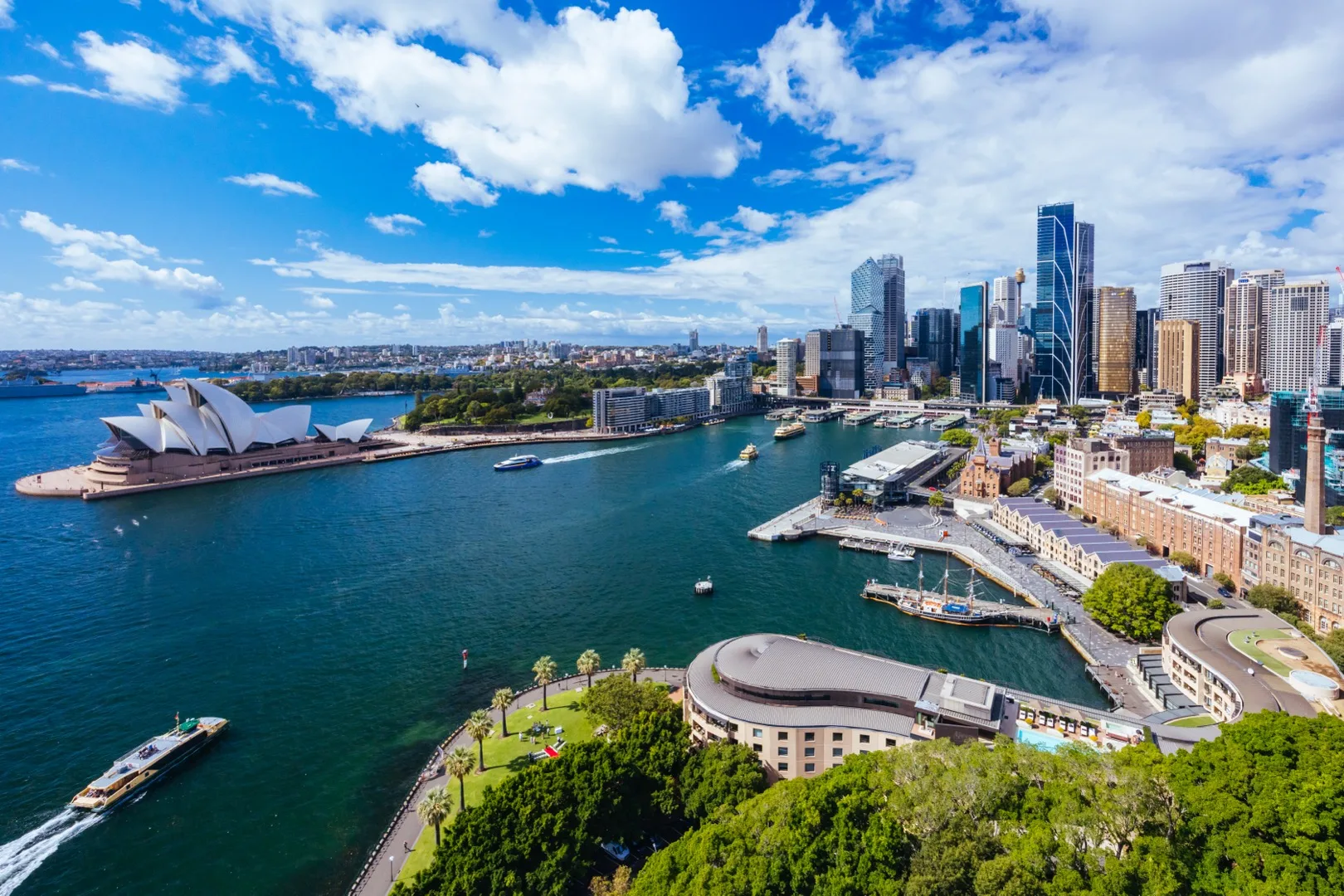
Sydney combines the laid-back Australian lifestyle with a rigorous and globally recognised education system. The Australian curriculum and the Higher School Certificate (HSC) are well-regarded internationally, and many Sydney schools also offer the IB Diploma as an alternative pathway to global universities. The city's large and diverse expat community — drawn by the technology, finance, and resources sectors — sustains a healthy range of international and private schools. English-medium instruction throughout removes language barriers, and the outdoor culture, safety, and open society make Sydney one of the most family-friendly cities on this list for long-term relocation.
Toronto
Toronto is consistently ranked among the world's most liveable cities, and its international school sector reflects the city's exceptional cultural diversity. The Canadian curriculum offers a well-rounded, low-stress educational philosophy, while private international schools delivering the IB and British frameworks cater to families seeking a more academically intensive track. Canada's immigration-friendly policies make Toronto an attractive long-term base, and many expat families transition their children smoothly from international private schools into the high-quality public system. The French-immersion option, available even in some international schools, is a unique Canadian advantage for families raising bilingual children.
Berlin
Berlin has emerged as one of Europe's most dynamic expat destinations, driven by a booming tech startup ecosystem and a vibrant arts and culture scene. International schools here offer the IB alongside British and American curricula, with fees significantly lower than London or Paris for comparable quality. Berlin's welcoming attitude to international families, its creative energy, and its excellent public infrastructure make it especially popular with families in the tech, media, and NGO sectors. German language integration is encouraged at many schools, providing children with a genuinely valuable second language in one of Europe's largest economies.
Factors to Consider When Choosing a City
No single city is right for every family. Use these key factors as a personal checklist when evaluating your options:
- Curriculum continuity: If your child may move again, prioritise cities with IB or British schools for maximum portability. Switching from a national curriculum mid-stream is disruptive.
- Language of instruction: English-medium education is available in all 16 cities, but the depth of choice varies significantly. Non-English speakers will find bilingual options most easily in Paris, Berlin, and Istanbul.
- Fee affordability relative to your package: Compare fee ranges against your relocation allowance. Istanbul, Berlin, and Bangkok offer outstanding value; New York and London command premium prices. See the complete cost guide for detailed breakdowns.
- Expat community size: A large, established expat community accelerates family integration and provides peer networks for children. Dubai, Singapore, London, and New York score highest here.
- University pathway alignment: If you know your target university system (UK Russell Group, US Ivy League, European public universities), choose a city where schools with the matching qualification are plentiful. The curriculum comparison guide is essential reading.
- Regulatory quality and school inspection: Dubai (KHDA), Singapore (MOE), and the UK (ISI/Ofsted) have the most rigorous inspection regimes. Always check a school's latest inspection report.
- Safety, healthcare, and family infrastructure: Singapore, Toronto, Sydney, and Amsterdam consistently top global safety and liveability rankings. All 16 cities on this list are safe for families, but the day-to-day quality of life varies considerably.
- Commute and school location: In megacities like London, New York, and Istanbul, commute times can be significant. Factor in proximity to your home or office neighbourhood when shortlisting schools.
Global Trend: International Schools Growing Fast
The number of international schools worldwide has grown by more than 50% in the past decade, from around 7,000 schools in 2015 to over 12,000 today. Total enrolment now exceeds 6 million students globally. The fastest growth is happening in the Middle East, Southeast Asia, and Eastern Europe — precisely the regions represented by several cities in this guide. This expansion reflects the increasing globalisation of professional careers and the rising demand from affluent local families seeking English-medium, internationally recognised qualifications for their children.
Emerging Destinations: The 6 Secondary Cities
While the top 10 cities offer the greatest depth of choice, these six emerging destinations deserve serious consideration — particularly for families open to a less crowded, more affordable expat experience.
Hong Kong
A world financial centre with a well-established international school sector. British and IB schools dominate. Fees are among the highest in Asia, but the compact city and excellent public transport make school logistics straightforward.
Kuala Lumpur
One of Asia's best-value expat cities. A growing number of British and IB schools serve a large multinational community drawn by the oil, gas, and financial services sectors. English is widely spoken and fees are very competitive.
Abu Dhabi
The UAE capital is quieter and more traditional than Dubai but offers a similarly well-regulated school market via the Abu Dhabi Department of Education and Knowledge (ADEK). A strong choice for families in the energy sector.
Bangkok
Southeast Asia's most affordable major international school market. An enormous and long-established expat community supports dozens of British, American, and IB schools. The low cost of living and exceptional food culture make Bangkok a favourite for families seeking quality without the premium price tag.
Amsterdam
A compact, cycling-friendly, English-speaking city that punches well above its size. Several highly rated international schools serve the large international business and NGO community. IB provision is particularly strong. Excellent for families prioritising work-life balance and European travel access.
Doha
Qatar's capital has invested heavily in education infrastructure and hosts a growing number of accredited international schools. The Qatar Foundation's Education City hosts branch campuses of world-leading universities, creating an aspirational educational ecosystem. Competitive fees and tax-free salaries make Doha a compelling proposition for families in the energy or construction sectors.
Not Sure Which City is Right for Your Family?
Compare the schools we list in each of the 16 cities by indicative fees, curriculum and age, then send your enquiry to the schools you choose. It is free for families.
Related Guides
- How to Choose the Right International School: A Parent's Complete Guide
- International School Fees Worldwide: Complete Cost Guide
- IB vs British vs American Curriculum: Which is Right for Your Child?
- Moving Abroad with Kids: 12-Month School Planning Timeline
- SchoolVita School Finder — Search Schools Across 16 Cities
Frequently Asked Questions
SchoolVita lists 14–17 schools in each of its 16 cities, so our directory is not a measure of market size. Globally, cities like Dubai and Singapore are among the densest international school markets on earth, benefiting from decades of expat population growth and strong government regulation. London also offers exceptional depth, particularly for British-curriculum and bilingual schools.
Bangkok, Kuala Lumpur, Istanbul, and Berlin consistently rank as the most affordable cities for international education among the 16 on this list. Bangkok in particular offers high-quality British and IB schools at a fraction of the cost of equivalent schools in London or Singapore. Amsterdam and Paris also offer relatively affordable options, especially within the French-system international school category. For full fee data, read our complete cost guide.
Singapore is widely regarded as the world's strongest IB market, with consistently high pass rates and several schools ranking among the global top performers. London, Amsterdam, and Dubai also have large concentrations of IB World Schools. The IB Diploma is universally recognised by top universities worldwide, making it an excellent choice for families with uncertain future relocation plans. See our full IB vs British vs American curriculum comparison.
English-medium international schools are available in all 16 cities on this list. However, the cities where English-only instruction is the overwhelming norm are Dubai, Singapore, London, New York, Miami, Sydney, Toronto, and Doha. In cities like Paris, Berlin, Istanbul, and Amsterdam, English-medium schools exist alongside strong national-language alternatives, giving families more choice. Bangkok and Kuala Lumpur also have large numbers of English-medium international schools, reflecting the regional dominance of English as a business language.
A well-established expat community dramatically eases family transition in three key ways. First, it sustains the diversity of school provision — large expat populations support more school choice across different curricula and price points. Second, it provides an immediate social network for newly arrived children and parents, reducing isolation and accelerating integration. Third, seasoned expat communities create informal knowledge networks: parent Facebook groups, school review forums, and local advisors who can share real-world experience about which schools are genuinely excellent versus which rely on reputation alone. If this is your family's first international move, choosing a city with a large, active expat community is strongly recommended. Use our School Finder to explore options by city.
Cities in this article
Free for parents
Looking for a school?
Tick the ones you'd like fees and admissions details from. We send your enquiry straight to their admissions teams.
Written by the SchoolVita team from schools' published information. Fees are indicative annual tuition; check the latest with each school.
Keep reading
-
Is an Expensive School Worth It? What Research Says About Fees vs Outcomes
Parents often assume that higher school fees guarantee better results. But what does the research actually say? We examine the relationship between tuition costs, academic outcomes, university placement, and whether a "good enough" school might be the smarter choice.

-
IGCSE vs GCSE: What International School Parents Need to Know
A comprehensive comparison of IGCSE and GCSE qualifications — covering exam boards, grading systems, subject flexibility, university recognition, and practical guidance for internationally mobile families choosing between the two.

-
Summer School Programmes 2027: International Schools Offering Holiday Courses
A comprehensive guide to summer programmes at international schools worldwide. Covers academic enrichment, sports camps, arts, STEM, and language immersion for ages 3-18 across Dubai, London, Singapore, New York, and Paris.

-
Best Schools in Sydney for Expat Families: 2026 Neighbourhood Guide
A neighbourhood-by-neighbourhood guide to schools in Sydney for expat families. Compare 16 schools across Eastern Suburbs, North Shore, Inner West, and Northern Beaches — with fees, curriculum types, and practical relocation tips.