
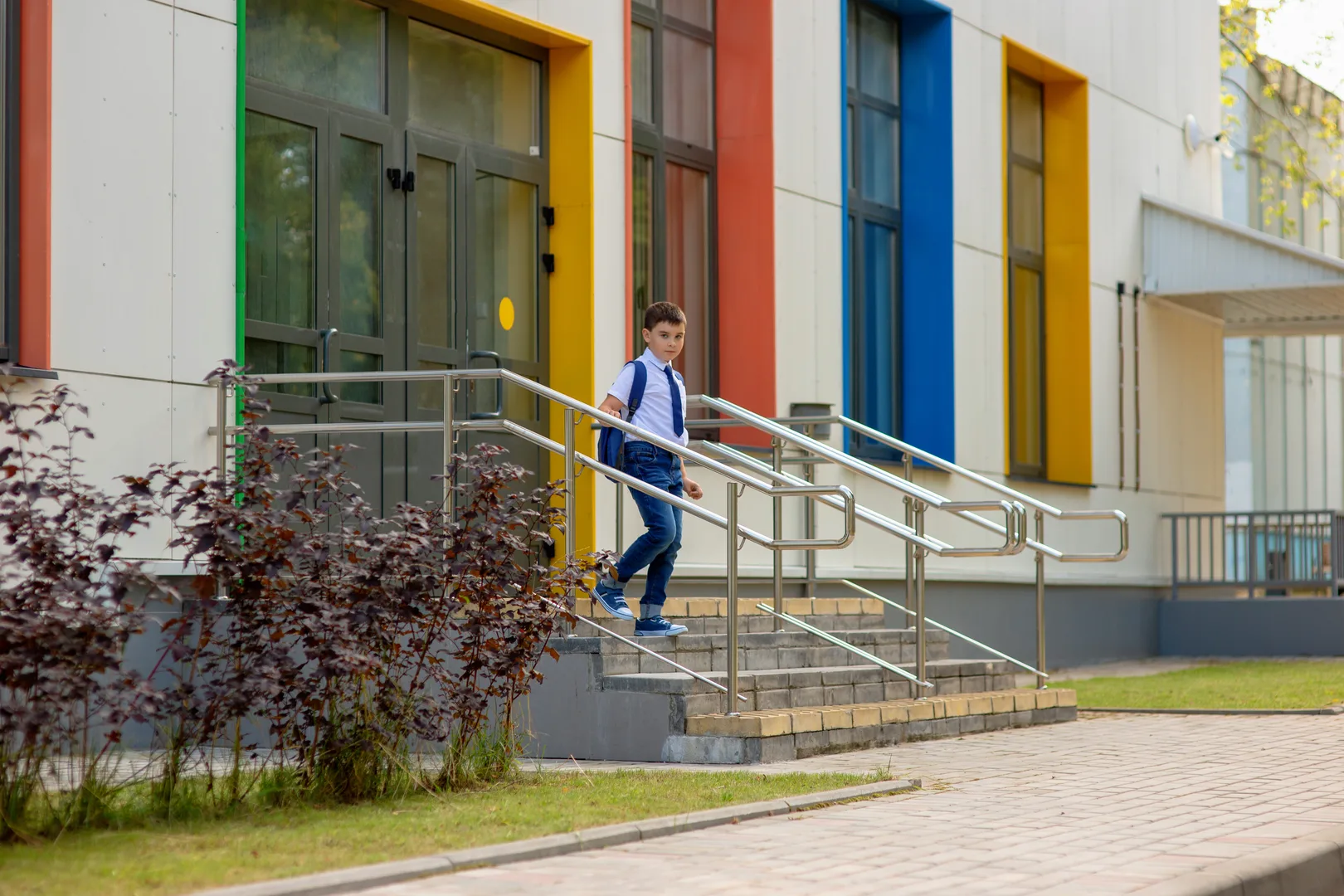
Why Timing Matters When Switching Schools
Moving a child from a national or local school to an international school is one of the most consequential decisions an expat family can make. The timing of that switch affects everything: academic continuity, social integration, language development, and even long-term university prospects. According to research by the International School Consultancy (ISC Research), there are now over 13,500 international schools worldwide serving 6.2 million students — a market that has tripled in two decades. Yet despite this growth, families consistently underestimate how much the age of transition matters.
This guide examines the natural entry points in international school systems, analyses curriculum transition challenges by age group, and provides a data-informed framework for choosing the optimal time to make the switch.
Natural Entry Points in International Schools
International schools are designed with specific intake years where cohorts form and curricula begin new phases. These natural entry points offer the smoothest transitions:
Reception / Kindergarten (Age 4–5)
This is the single easiest point to enter an international school. Children are forming their first school friendships, and curriculum expectations are minimal. Language barriers are overcome rapidly at this age — research shows that children under six can acquire a second language to native-like proficiency within 12–18 months of immersion. If you know an international move is coming, starting your child in an international school at Reception age eliminates virtually all transition friction.
Year 7 / Grade 6 (Age 11–12)
The start of secondary school is the second-best entry point. Most international schools design Year 7 as a fresh start: new subjects, new teachers, often a new campus. Social groups are reshuffled as students arrive from multiple feeder schools. A child entering at this stage joins a cohort where everyone is adjusting, which significantly reduces the "new kid" effect.
Academically, Year 7 marks the beginning of the British secondary curriculum or the IB Middle Years Programme. Subject content becomes more specialised, but the pace in Year 7 is deliberately measured to allow students to settle. Schools experienced in international transitions often provide additional support during this year.
Year 12 / Grade 11 (Age 16–17)
Entering at the start of the IB Diploma Programme or A-Levels is viable but carries significant caveats. On the positive side, this is a natural restart: students select new subjects and form new study groups. Many international schools actively recruit at this stage, and admissions teams are accustomed to integrating students from different systems.
However, the academic stakes are high. A student entering the IB Diploma, for example, must choose six subjects, commit to the Extended Essay and Theory of Knowledge, and complete CAS requirements — all within a two-year window with no room for a slow start. This entry point works best for academically strong, self-motivated students who can handle intensity from day one.
Curriculum Transition Challenges by Age
| Age Group | Transition Difficulty | Key Challenges | Adaptation Time |
|---|---|---|---|
| 3–5 years | Low | Separation anxiety; minor language adjustment | 2–6 weeks |
| 6–8 years | Low–Moderate | Literacy gaps if switching language of instruction; phonics differences | 1–3 months |
| 9–11 years | Moderate | Established friendships disrupted; curriculum content gaps in maths/science | 3–6 months |
| 12–14 years | Moderate–High | Subject option misalignment; social identity formation; possible exam prep disruption | 6–12 months |
| 15–16 years | High | Mid-GCSE/IGCSE switch; coursework continuity; limited subject change options | 6–12+ months |
| 17–18 years | Very High | Mid-IB or mid-A-Level; university application timelines; credential recognition risk | Often not recommended |
Language Considerations
Language is frequently the most underestimated factor in school transitions. While younger children (under 8) typically acquire conversational fluency in a new language within 6–12 months, academic language proficiency — the ability to analyse, argue, and write at grade level — takes significantly longer. Linguist Jim Cummins' research distinguishes between Basic Interpersonal Communication Skills (BICS), acquired in 1–3 years, and Cognitive Academic Language Proficiency (CALP), which takes 5–7 years to develop fully.
This means a 12-year-old switching to an English-medium international school from a non-English system will likely need dedicated English as an Additional Language (EAL) support for at least two years. The best international schools provide structured EAL programmes with pull-out sessions, in-class support, and modified assessments during the transition period. When evaluating schools, always ask about EAL provision — it's a reliable indicator of how experienced a school is in handling international transfers.
Social Impact Analysis
The social dimension of switching schools is age-dependent and follows predictable patterns:
- Ages 3–7: Friendships are activity-based and fluid. Children form new bonds quickly and rarely experience lasting social disruption from a school change.
- Ages 8–11: Peer groups become more defined. A new student can integrate successfully but may need 2–3 months to find their social footing. Schools with strong pastoral care and buddy systems ease this process.
- Ages 12–14: This is the highest-risk period for social difficulty. Adolescent identity formation is closely tied to peer groups, and established cliques can be difficult to penetrate. Students who are naturally outgoing or have strong extracurricular interests (sport, music, drama) tend to integrate faster.
- Ages 15–18: Paradoxically, older teenagers can adapt socially better than early adolescents because they have more developed social skills and self-awareness. However, the academic pressure at this stage means less time and energy for social integration.
When Switching Is Easiest vs. Hardest
Based on the combined academic, linguistic, and social factors, here is a clear ranking:
- Easiest: Reception/Kindergarten (age 4–5) — minimal academic disruption, rapid language acquisition, fluid social dynamics
- Easy: Year 7/Grade 6 (age 11–12) — natural restart point, all students adjusting, curriculum designed for fresh intake
- Moderate: Years 3–5/Grades 2–4 (age 7–9) — manageable gaps, good language acquisition window, adaptable socially
- Challenging: Year 12/Grade 11 (age 16–17) — viable for strong students, but high stakes and no margin for error
- Difficult: Years 8–9/Grades 7–8 (age 12–14) — peak social sensitivity, curriculum options narrowing, potential exam prep disruption
- Hardest: Year 10–11/Grade 9–10 (age 14–16) — mid-GCSE/IGCSE, coursework cannot transfer, subject misalignment common. See our detailed guide on changing schools in Year 10.
Data on Adaptation Speed
A 2019 study by the Council of International Schools (CIS) surveyed 4,200 internationally mobile students and found that:
- 78% of students who switched before age 10 reported feeling "fully settled" within one academic term
- 54% of students who switched between ages 10–14 needed two terms or more to feel settled
- 31% of students who switched after age 14 reported ongoing adjustment challenges beyond one year
- Students with prior international school experience adapted 40% faster than those coming from national systems for the first time
Practical Steps Before Making the Switch
- Audit curriculum alignment: Request the school's scope and sequence documents and compare them to your child's current curriculum. Identify specific gaps in maths, science, and languages.
- Assess language support: If your child will be switching language of instruction, confirm the school offers robust EAL support and ask for specific details about the programme.
- Plan the social transition: Ask about orientation programmes, buddy systems, and extracurricular activities your child can join immediately.
- Time it right: Whenever possible, aim for the start of an academic year. Mid-year transfers add an extra layer of difficulty — read our guide on mid-year school transfers if this is unavoidable.
- Visit before committing: An in-person school visit (with your child present) provides irreplaceable insight into culture, environment, and fit.
Finding the Right International School
The best time to switch is when academic disruption is lowest, social integration is easiest, and your family has had time to plan. For most families, that means Reception or Year 7. If your move falls outside those windows, focus on schools with strong transition support, proven EAL programmes, and flexible admissions processes. Use SchoolVita to compare international schools across cities and curricula, and make the switch with confidence.
Frequently Asked Questions
The optimal transition points are ages 3–5 (entry to Early Years or Kindergarten), age 11 (start of secondary/middle school), or age 16 (start of IB Diploma or A-Levels). These are natural curriculum breakpoints where new student intake is highest. Children who transition at these ages benefit from joining alongside other new students, making social integration significantly easier.
It is not too late, but timing matters. At 14 (Year 9 or Grade 9), students have one year before beginning two-year examination programmes such as IGCSE or MYP. This gives them time to adjust to a new teaching style and curriculum before high-stakes assessments begin. Switching mid-way through Year 10 or Grade 10 is more challenging because coursework and controlled assessments may already be underway. Most admissions teams recommend starting at the beginning of an academic year for the smoothest transition.
Most international schools offer dedicated English as an Additional Language (EAL) support for non-native speakers. Children under 10 typically reach conversational fluency within 6–12 months and academic fluency within 2–3 years, according to research by linguist Jim Cummins. Older students may take longer for academic English but can access subject content through bilingual support or modified assessments during the transition period. Many schools assess English proficiency as part of the admissions process and create individual support plans.
Most international schools accept students from age 3 through to age 18, though entry at certain year groups can be competitive. Popular entry points — Reception (age 4–5), Year 7 (age 11–12), and Year 12 (age 16–17) — typically have the most available places. Mid-year or mid-key-stage entries are possible but depend on class capacity. Some schools maintain waiting lists for oversubscribed year groups, so applying 6–12 months in advance is advisable, especially at top-tier schools.
Explore Schools
Find and compare the best schools worldwide by type or curriculum.
Free · No obligation
Looking for a school?
Tick the ones you'd like fees and admissions details from. We send your enquiry straight to their admissions teams.
Related Articles

Is an Expensive School Worth It? What Research Says About Fees vs Outcomes
Parents often assume that higher school fees guarantee better results. But what does the research actually say? We examine the relationship between tuition costs, academic outcomes, university placement, and whether a "good enough" school might be the smarter choice.

IGCSE vs GCSE: What International School Parents Need to Know
A comprehensive comparison of IGCSE and GCSE qualifications — covering exam boards, grading systems, subject flexibility, university recognition, and practical guidance for internationally mobile families choosing between the two.

Summer School Programmes 2026: International Schools Offering Holiday Courses
A comprehensive guide to summer programmes at international schools worldwide. Covers academic enrichment, sports camps, arts, STEM, and language immersion for ages 3-18 across Dubai, London, Singapore, New York, and Paris.

How to Choose Between IB and A-Levels in 2026: A Parent's Decision Guide
IB Diploma or A-Levels? This data-driven guide compares workload, university acceptance rates, subject flexibility, costs, and more to help parents choose the right pre-university programme for their child in 2026.